
Impressive Butcher’s Knife with 10.5” Carbon Steel “Double Shear” Blade by John Wilson (I. Wilson) of Sheffield
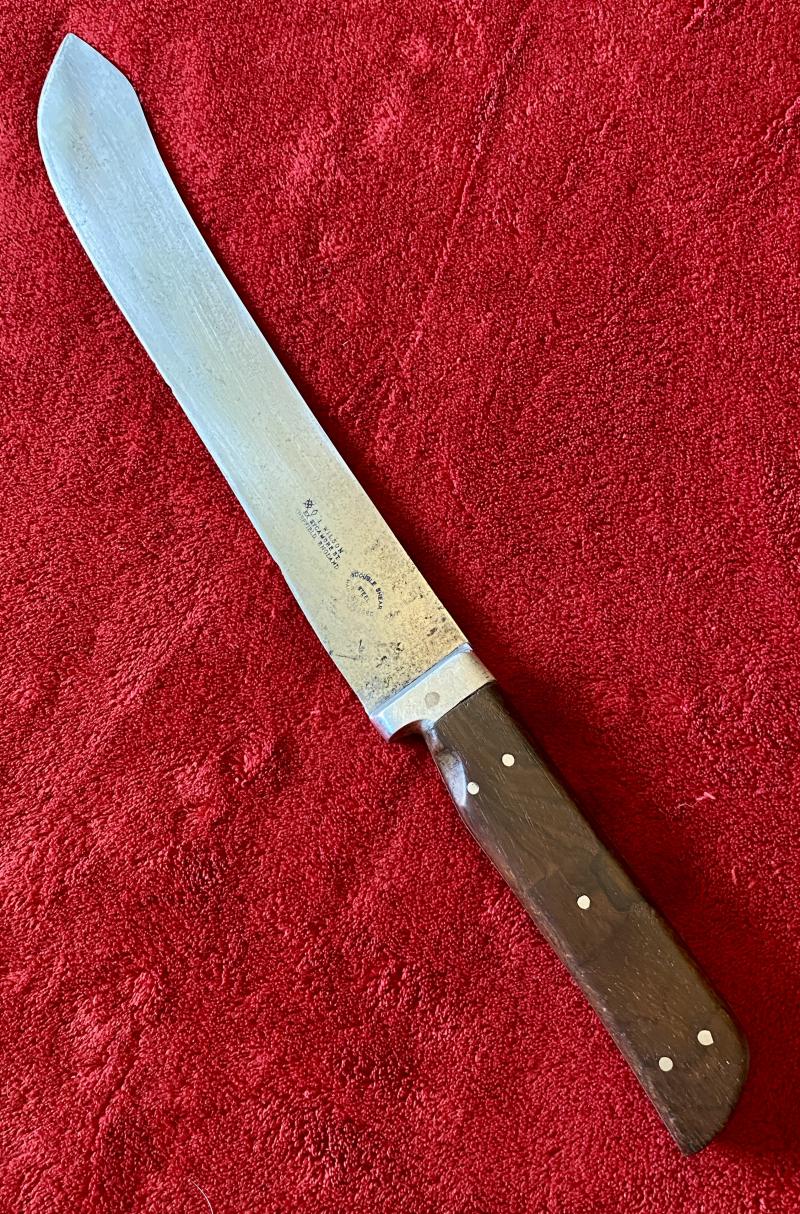
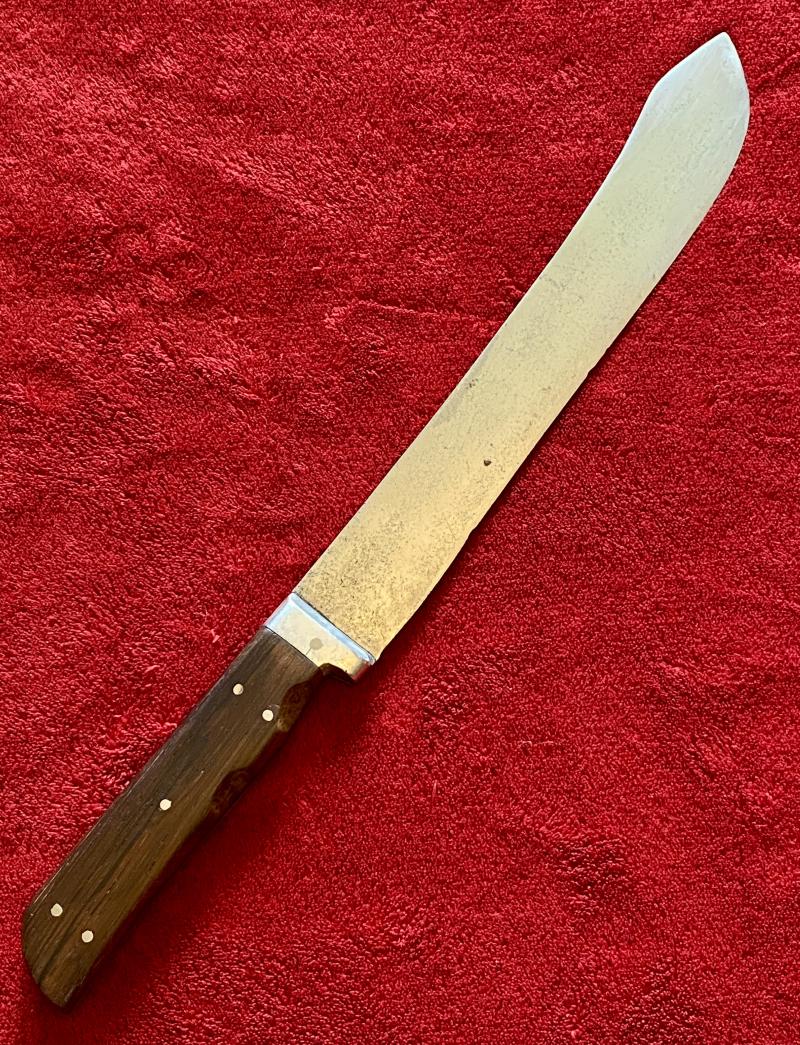
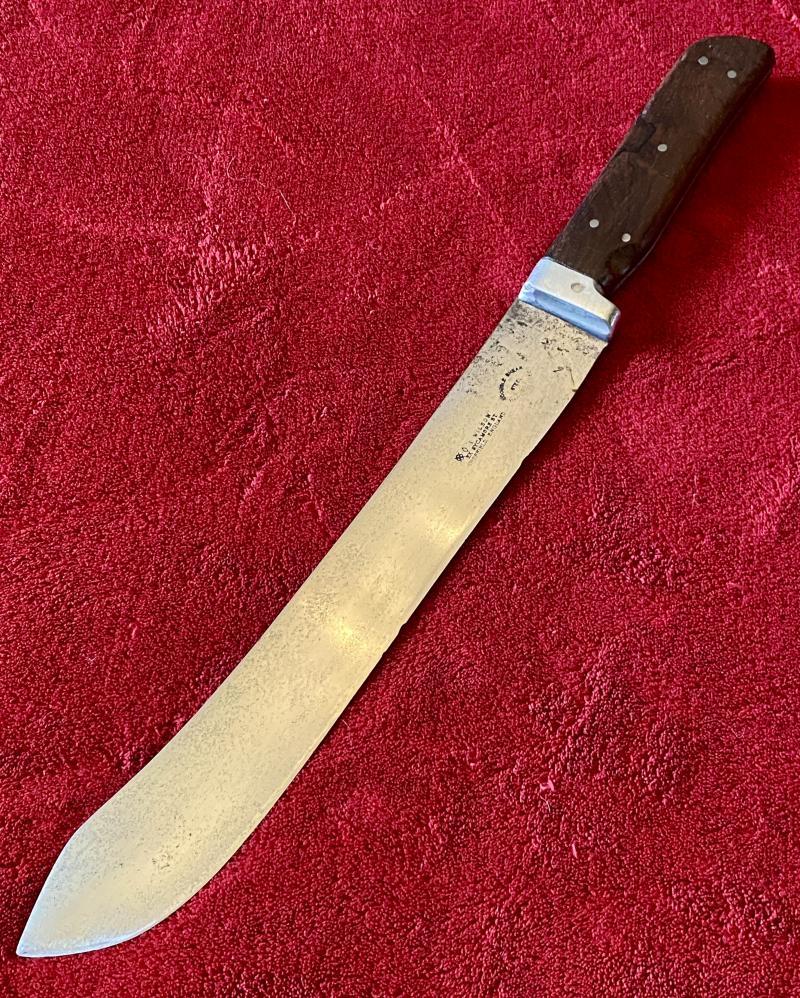
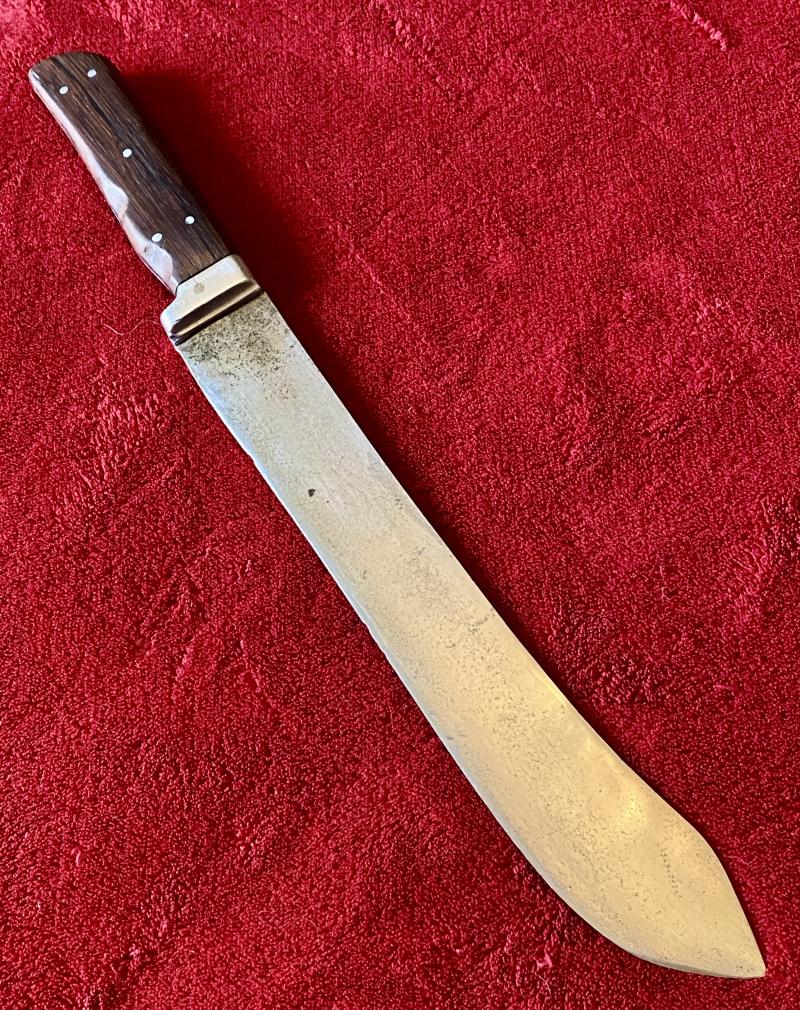
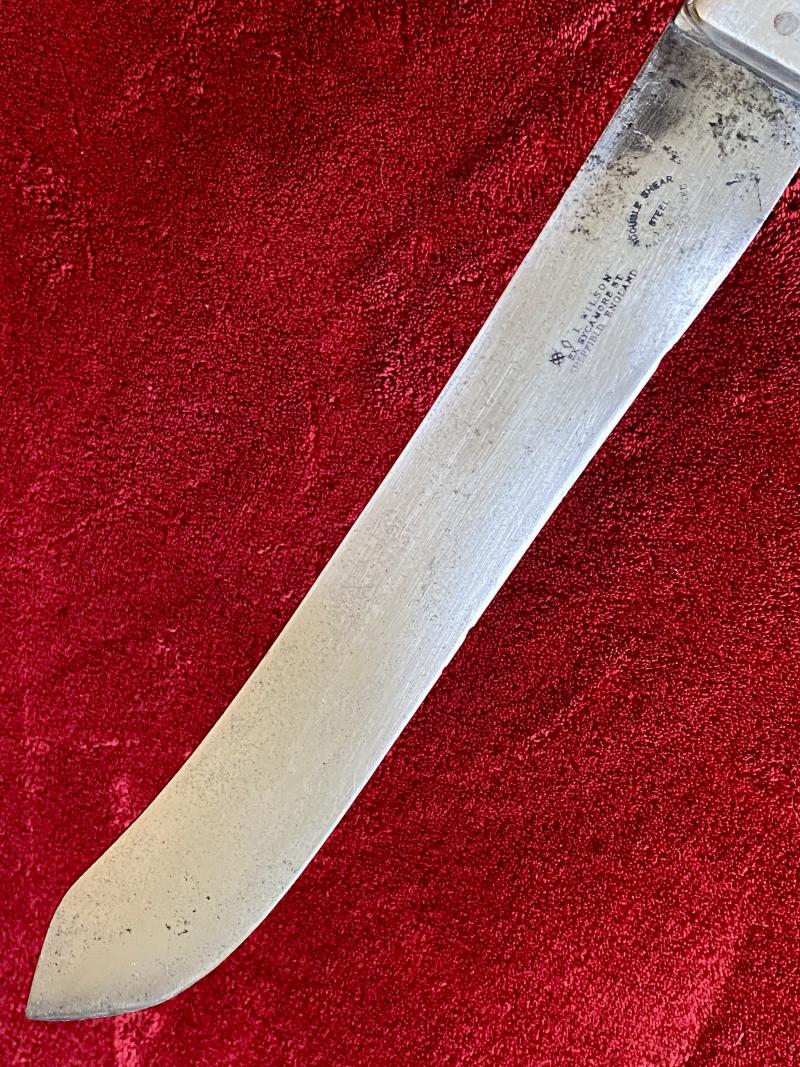
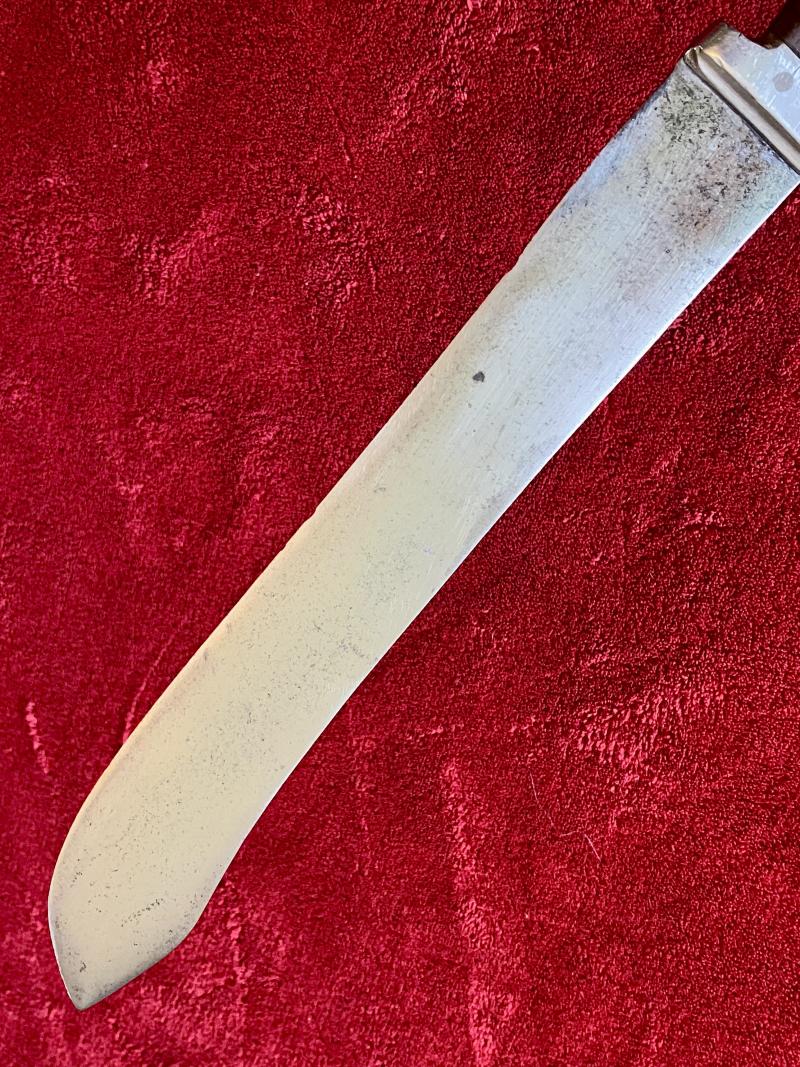
Here on offer is an impressive butcher’s knife with a 10.5” hand forged, carbon steel “Double Shear” blade and rosewood grip, by I. Wilson of Sheffield.
The Double Shear Steel refers to high-quality, hand-forged carbon steel blades produced by the renowned English cutlery firm of John Wilson, also known as “I. Wilson”, during the 19th and early 20th centuries.
"Double Shear" is a specialized, multi-step refining process used before the invention of modern, mass-produced alloys:
Blister Steel: Wrought iron bars were heated in sealed containers with charcoal to absorb carbon.
First Shear: The blister steel bars were broken into pieces, stacked, forge-welded together, and hammered into a single bar.
Double Shear: The process was repeated a second time—the bar was cut, stacked again, forge-welded, and beaten into the final blade.
Repeating the folding and forging process eliminated impurities and distributed the carbon more evenly.
In the resulting double shear steel—often hitting around 0.70% carbon—the structure retained microscopic veins of harder and softer steel.
When sharpened on a coarse stone, the softer steel wore away slightly faster, leaving behind microscopic "teeth" that excelled at sawing through meat and fibrous materials.
John Wilson is listed as one of the masters of the Sheffield Cutlers Guild, 1624-1905. The firm became legendary in the 19th-century American frontier. Their rugged "shear steel" butcher and skinning knives were highly prized by mountain men, fur traders, and Native Americans for their exceptional sharpness and durability.
The slightly curved tipped blade on this knife is in excellent condition, with just some light pitting/darkening to the finish.
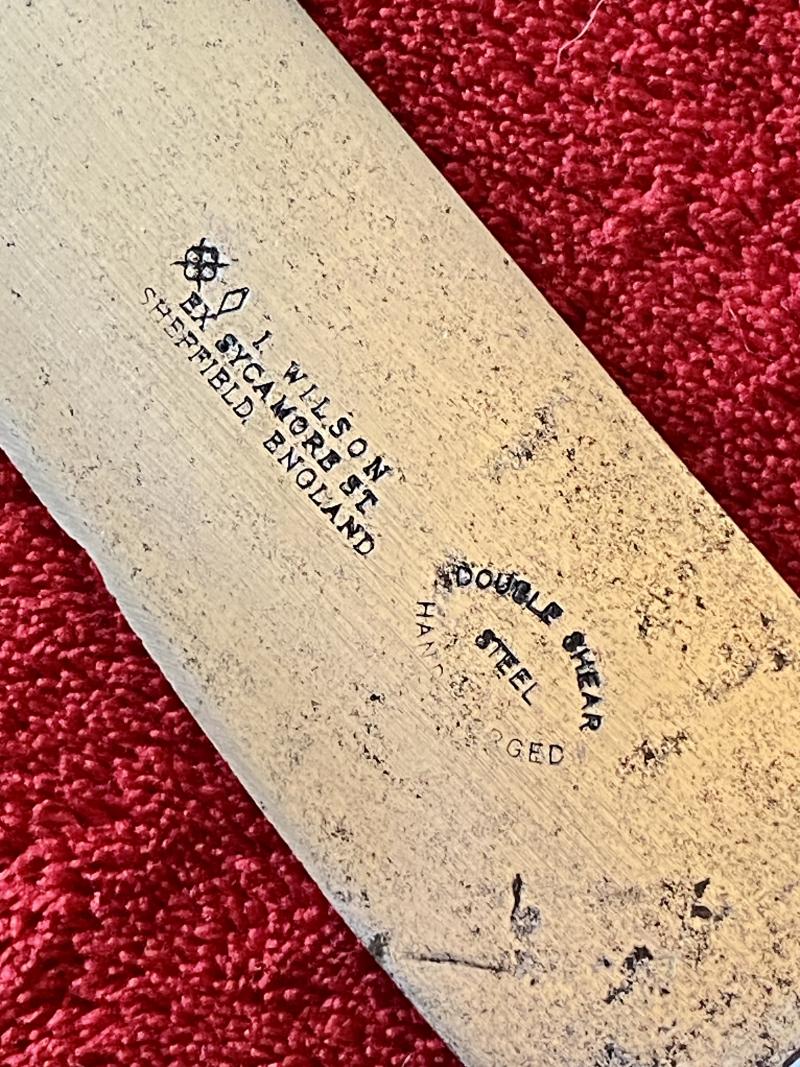
On one side of the blade, it is stamped with John Wilson’s world famous ‘Four Peppercorns & Diamond’ trade mark, that symbolizes the knife cuts as keen as pepper and carries an edge like a diamond! Then there are the words:
I WILSON
EX SYCAMORE ST
SHEFFIELD ENGLAND
Then in an oval pattern:
DOUBLE SHEAR
STEEL
HAND FORGED
The "EX SYCAMORE ST", relates to the factory that was famously located on Sycamore Street in Sheffield. When stamped as "Ex Sycamore St.", it typically indicates a production date from the late 19th century to the mid-20th century (often post-1891 or post-WWII depending on the layout), after the company expanded or altered its corporate markings.
The "I. Wilson" name, although founded by Thomas Wilson and consolidated by his son John Wilson, the stamping reads "I. Wilson" because the historical stamp for a capital "J" strongly resembled an "I" in old English script.
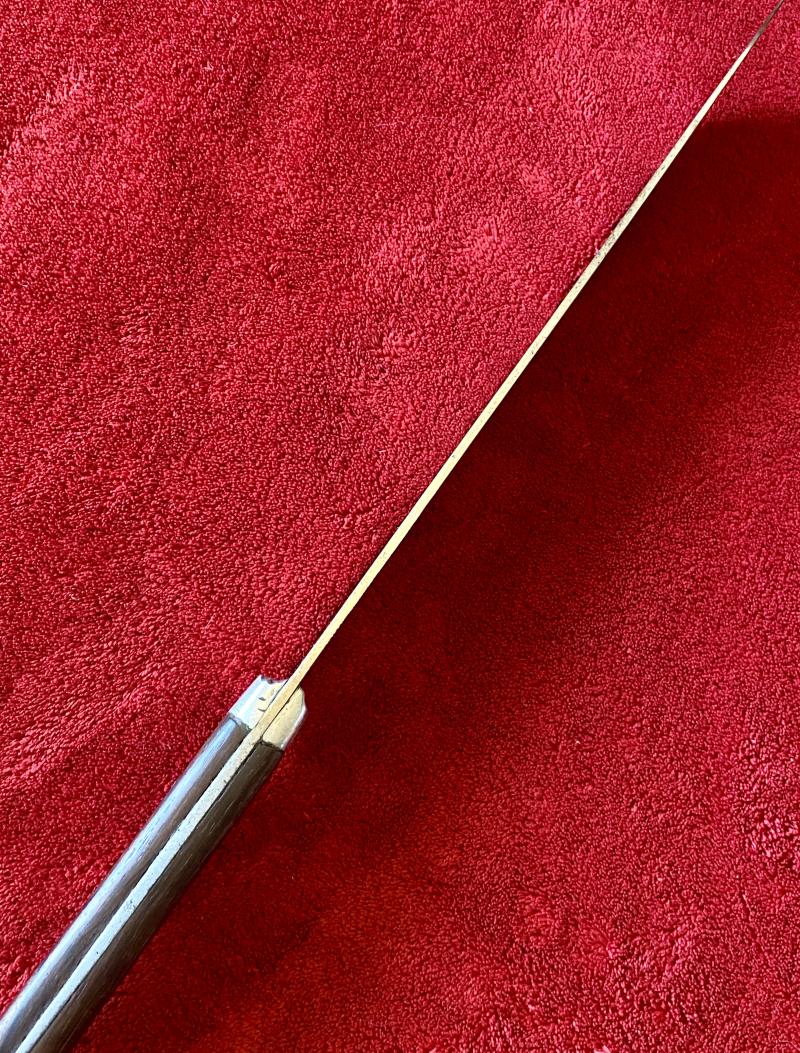
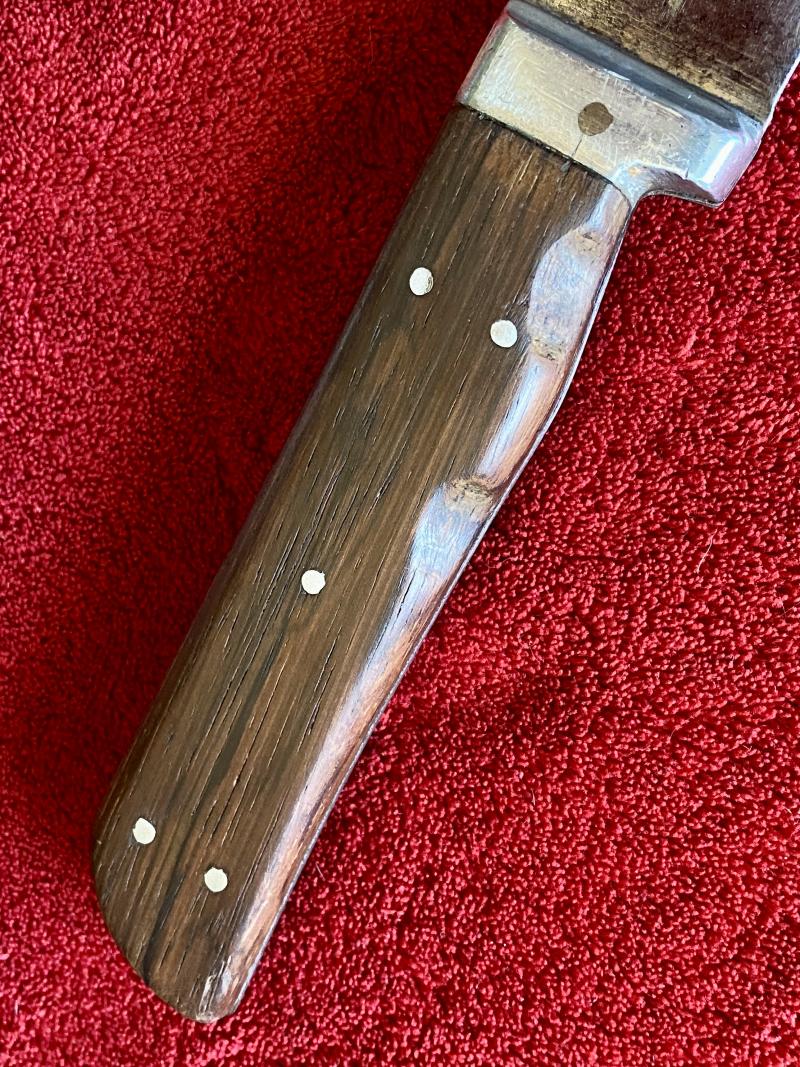
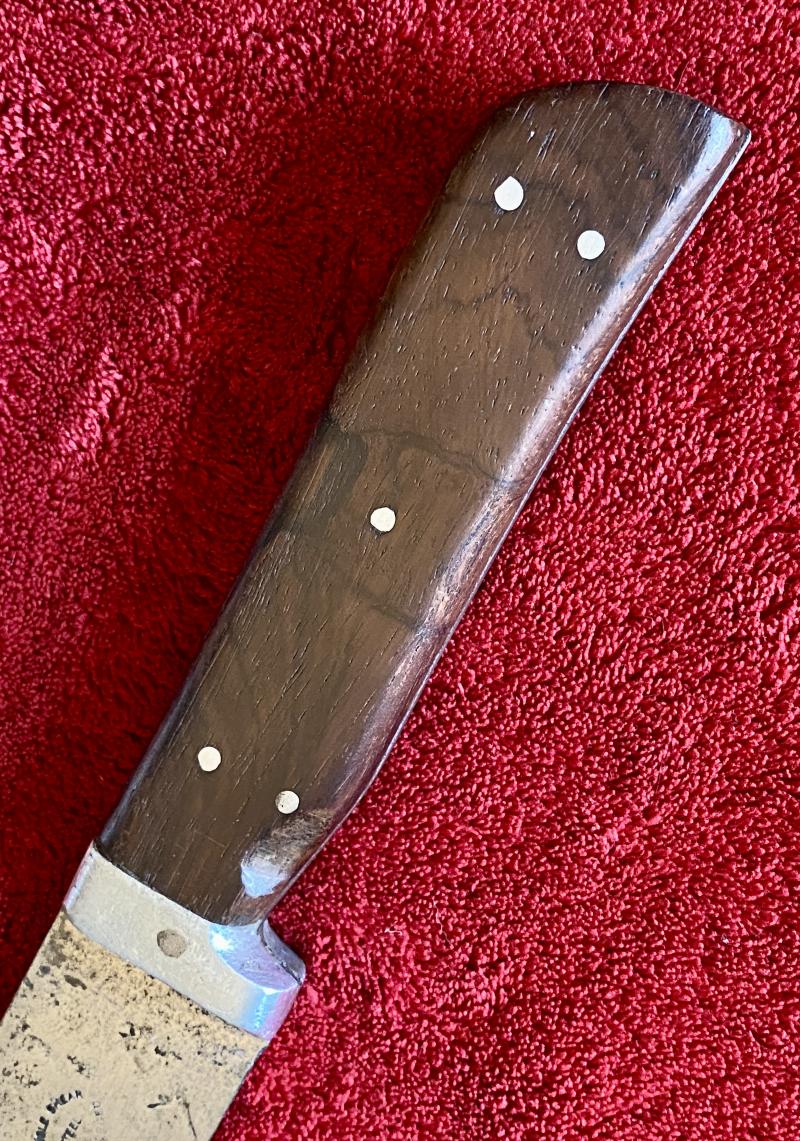
The beautiful grained rosewood grip scales have some finger grooves cut into the edges and are held securely in place against the blades tang by five steel pins.
What is slightly unusual with this fine example is that is has an aluminium finger guard, that fits flush with the grip.
Knives marked with the “I. WILSON” name (frequently associated with Sycamore Street in Sheffield) were highly sought after by tradesmen, trappers, and butchers. Pieces that survived from the Victorian era remain highly collectible antiques today.
The whole knife measures 16.25” (41.3cm) long and has a 10.5” (26.7cm) blade.
It weighs 295g.
Please see my pictures for the details of the condition that complement this description.
Please see my TERMS OF BUSINESS regarding Deliver Charges and Insurance regarding additional insurance cover, should you require it, BEFORE the item is dispatched.
The responsibility lies with the customer to check with your Customs restrictions that this item can be imported into your country.
Code: 52336