
Stunning WW1 Trench Art British 18 Pounder Field Gun Embossed Brass Shell Case Commemorating The Battle of Liège 1914
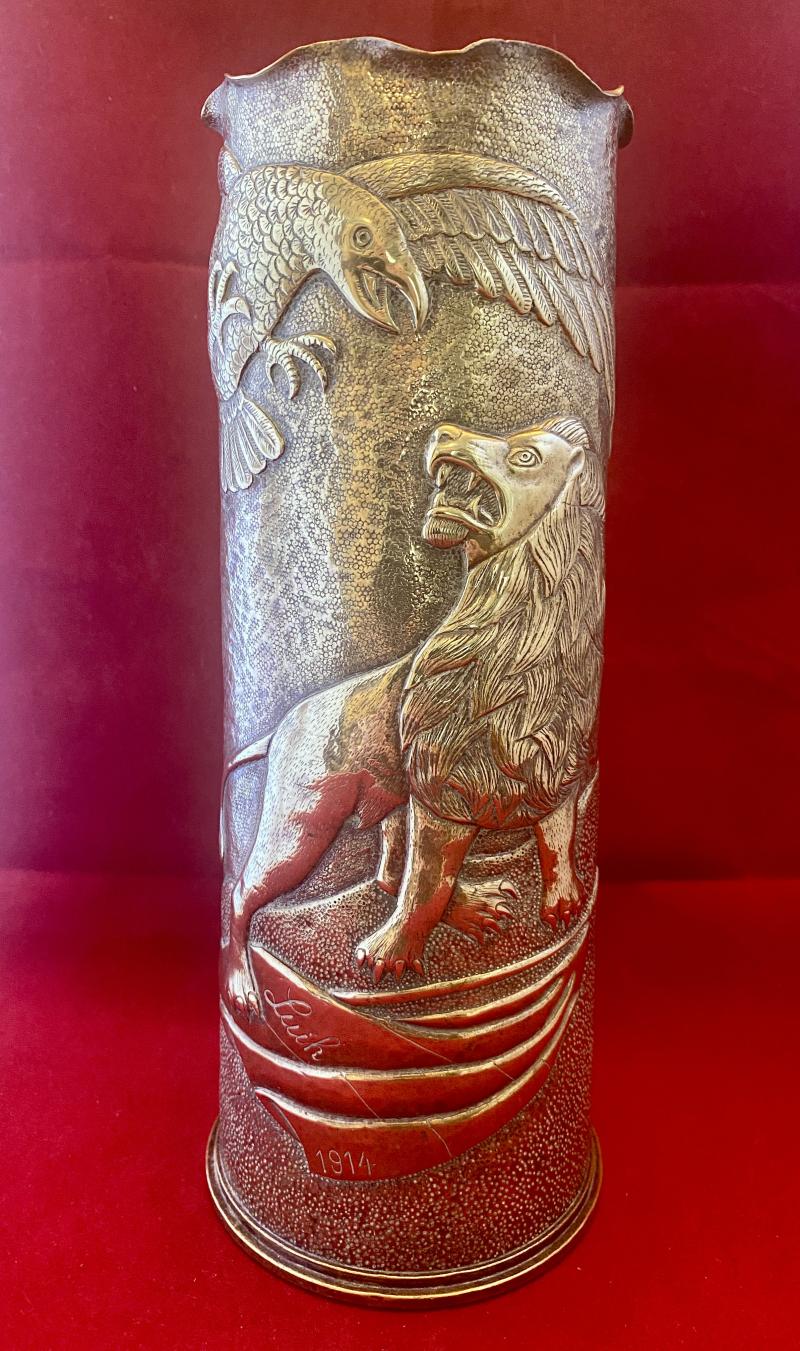
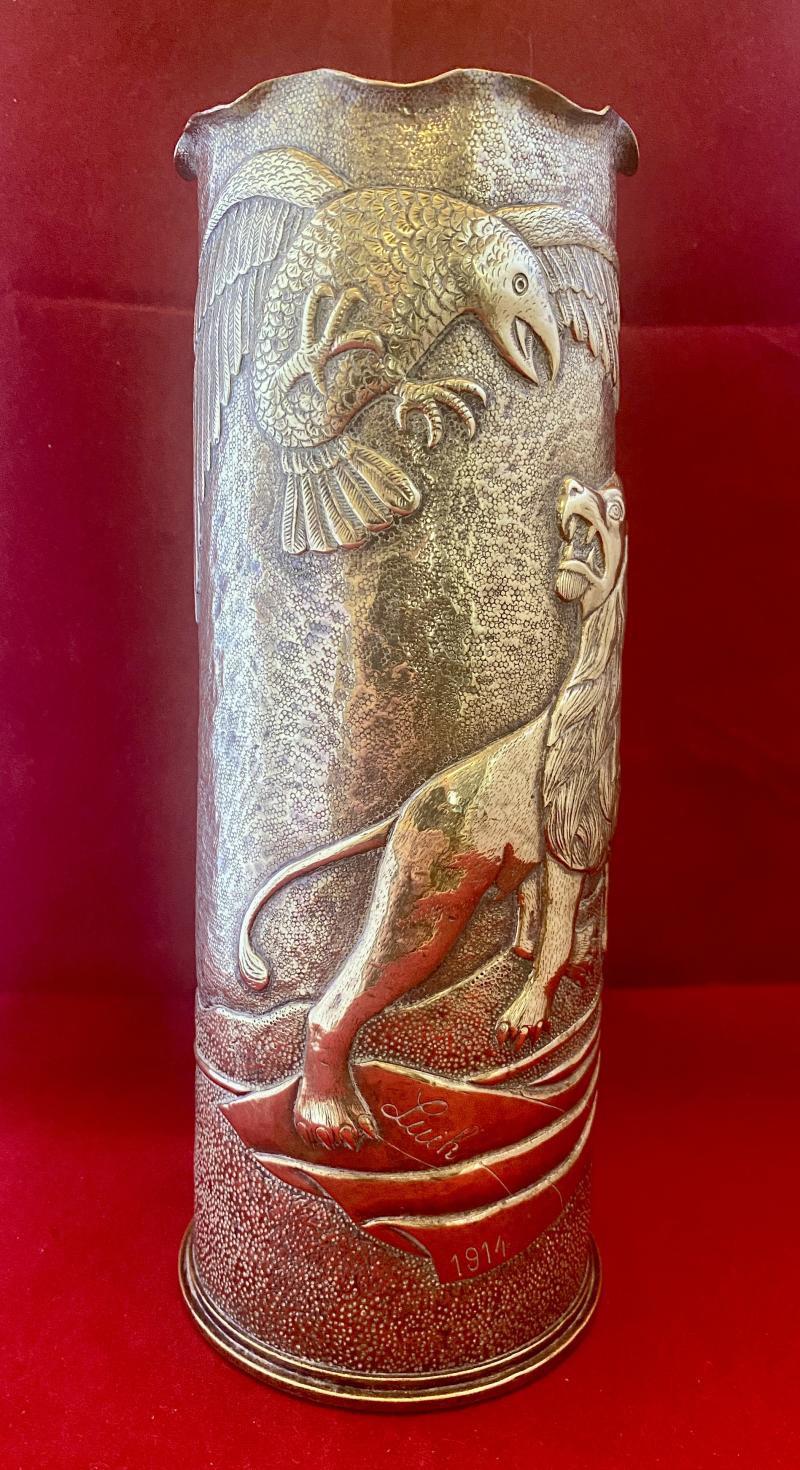
Here on offer is a beautifully embossed example of trench art, being a WW1 British 18 pounder field gun brass shell case, commemorating The Battle of Liège or Luik in 1914.
Luik is the Dutch name and Liège is the French name for the same city in eastern Belgium. The variation exists due to the city's location in the bilingual/multilingual region of Wallonia, where both French and Dutch are used.
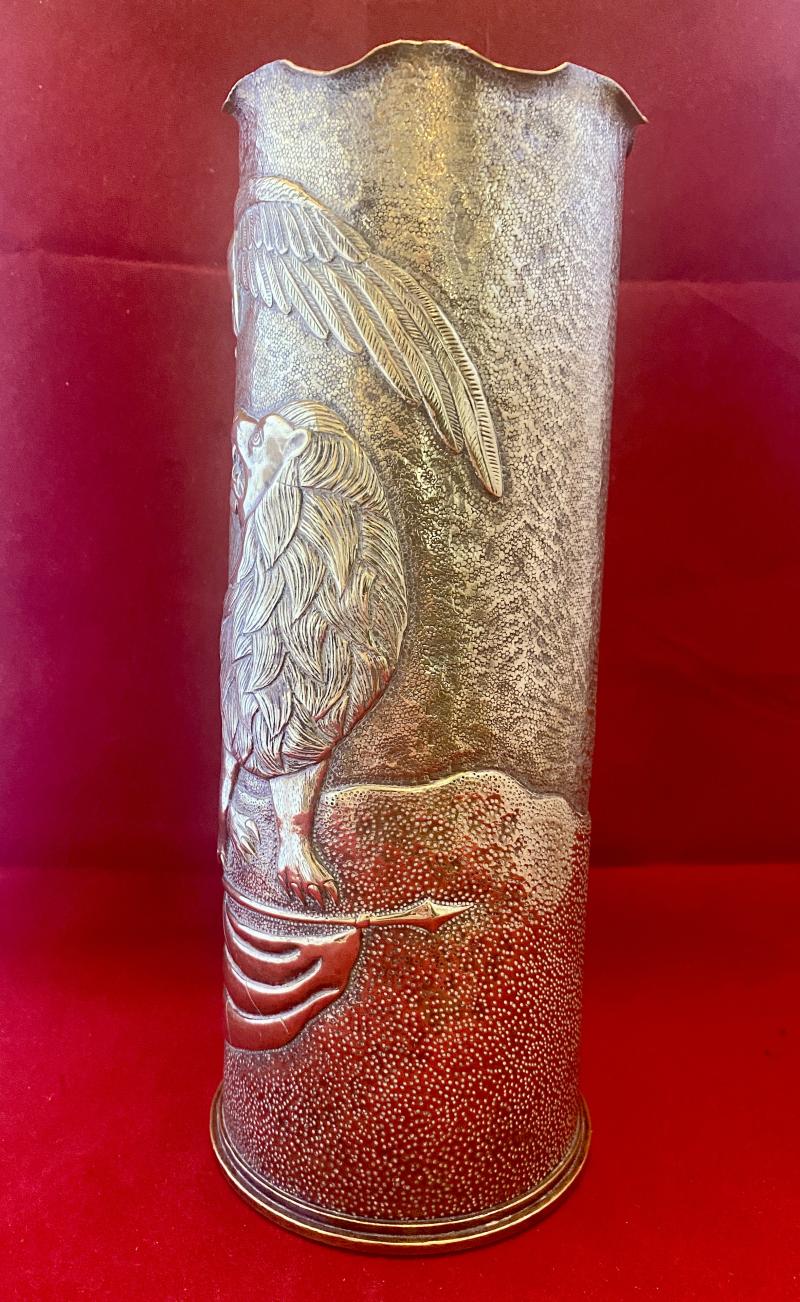
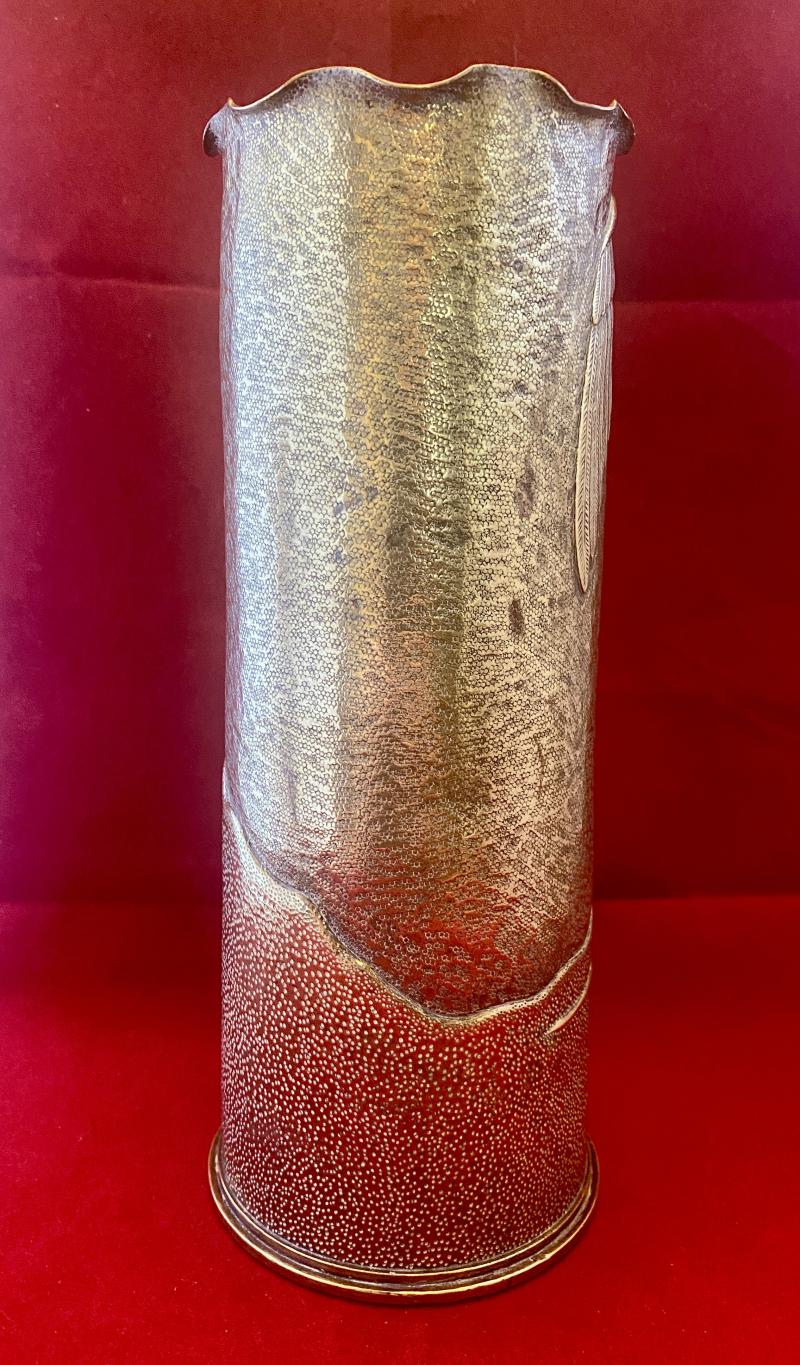
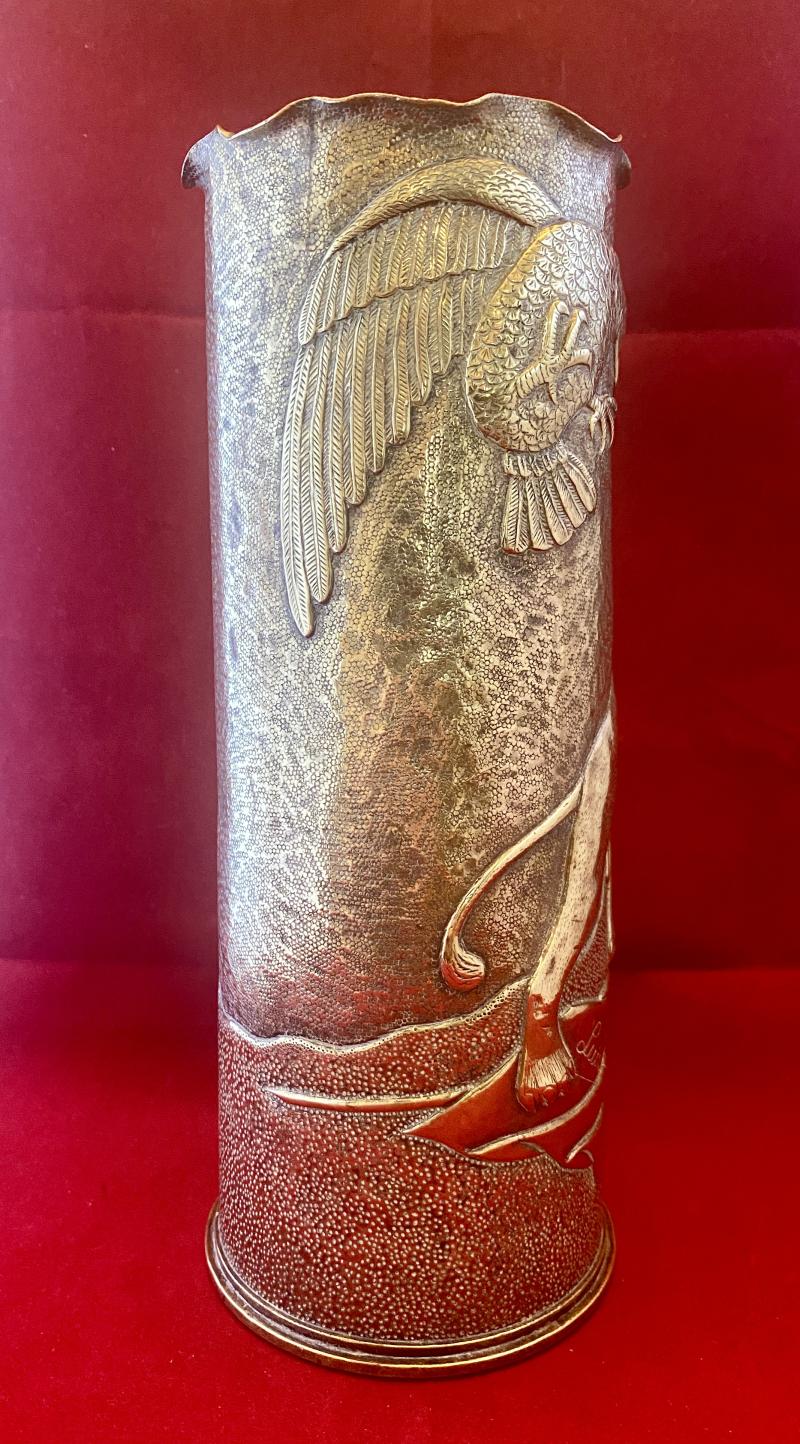
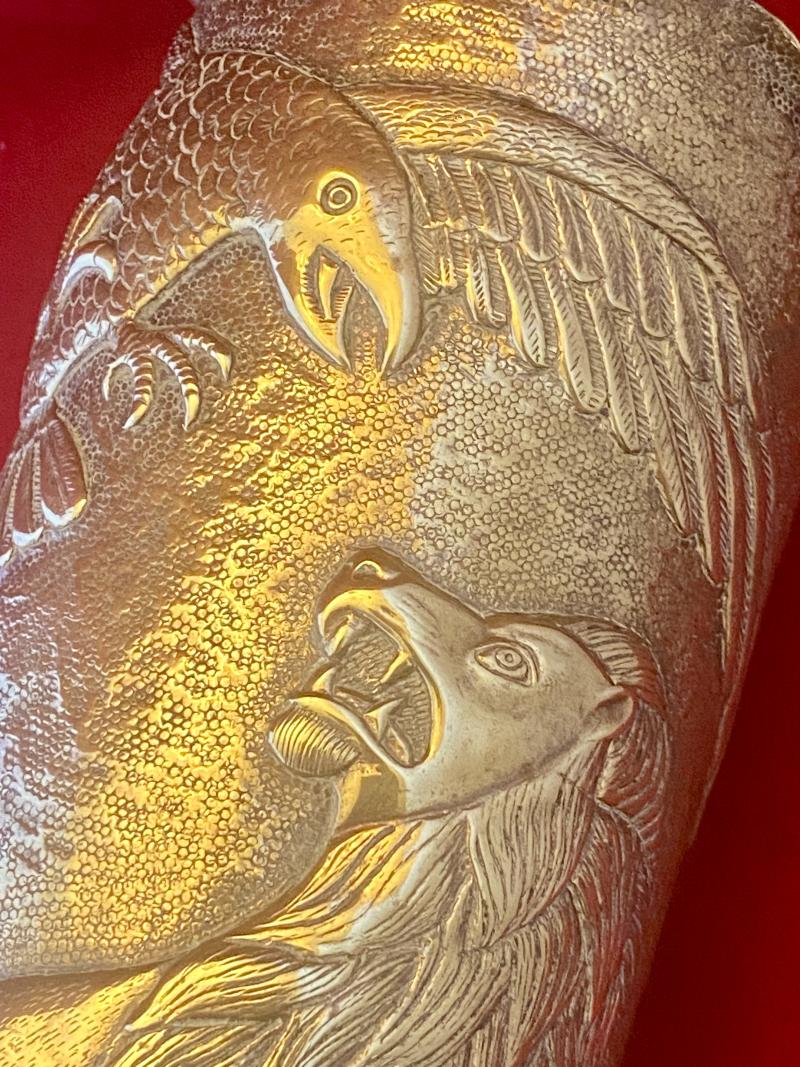
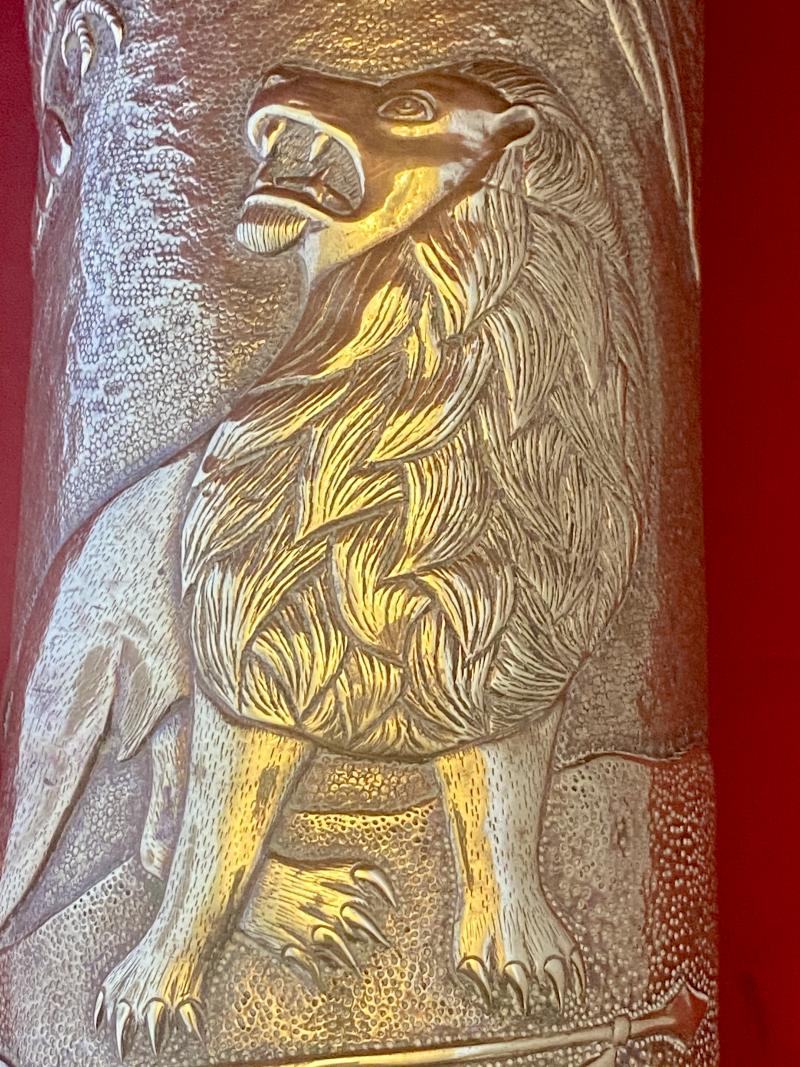
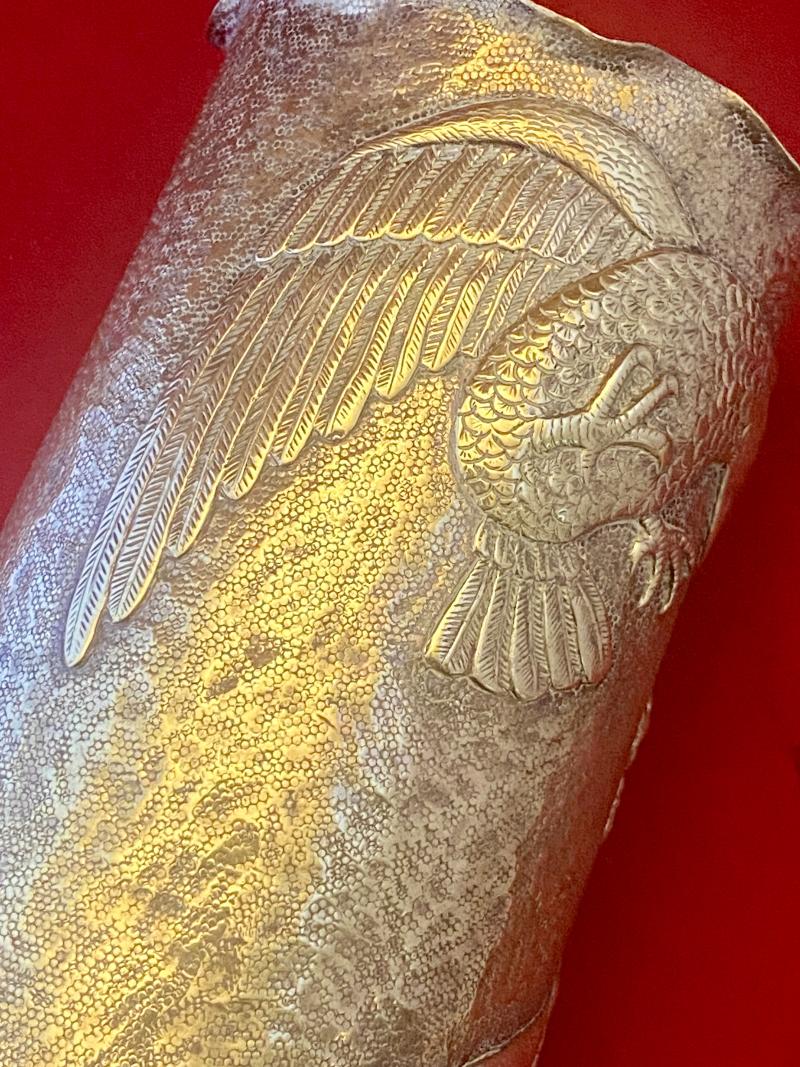
The case has been skillfully hand-embossed with the images of the German Imperial eagle swopping down on the Belgium lion, that is standing on a flag, all set against a finely stippled background, that goes all around the outside of the case.
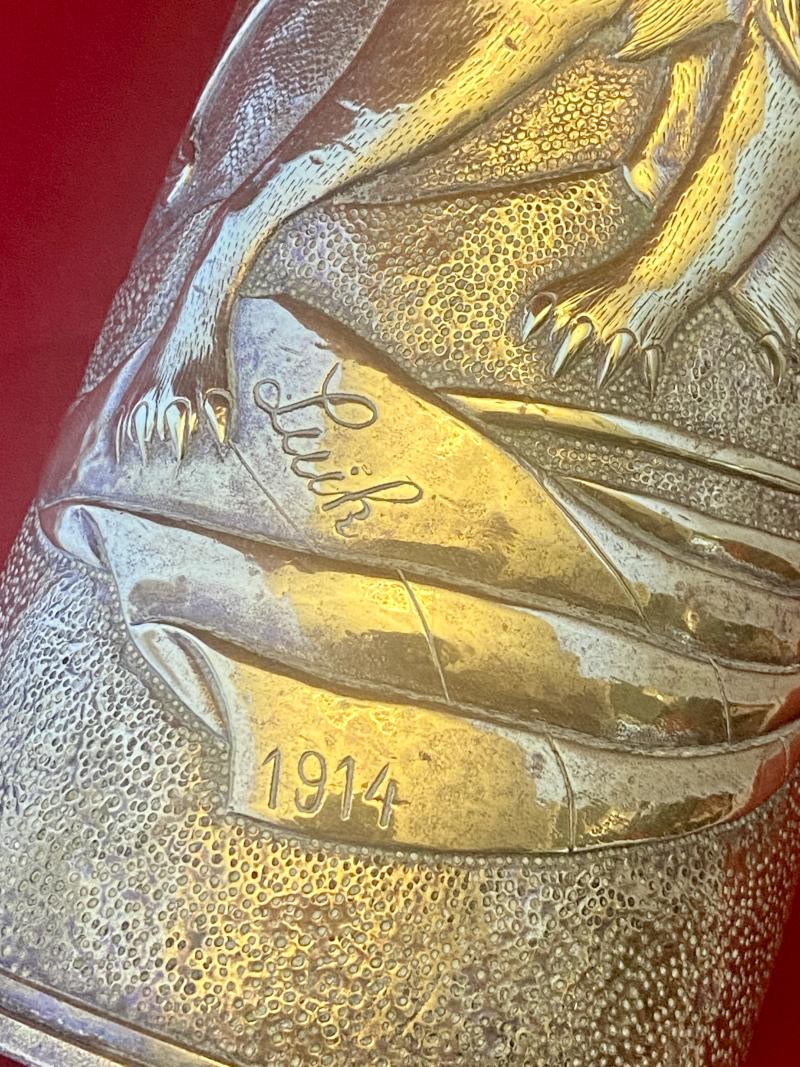
The words “LuiK 1914” are clearly engraved on the folds of the flag, indicating that this depiction relates to the first battle of WW1, that took place at Liège or Luik in Belgium, in 1914.
The Battle and Siege of Liège (4 - 16 August 1914) was the first battle action on the Western Front, fought between the German Imperial Army and the Belgian Army. The historic Belgian city was located on high ground on the banks of the River Meuse. The city was surrounded by fortresses, built as defences to protect it because it was located on an important route into Belgium along the Meuse river valley between the Dutch border and the Ardennes forests. Twelve main forts encircled the city, being built below ground on a radius of approximately 4-6 miles from the city and with approximately 3 miles distance between each fort.
Six brigades from the German Second Army were sent to Liège capture the forts on 4 August. One German brigade succeeded in breaking through the line of forts. The Germans occupied the city on 7 August after attacks on it by a Zeppelin airship and artillery fire. From 12 - 16 August the shells from 11 huge howitzers, these being two German “Dicke Bertha” (Big Bertha”) guns made by Krupp and 9 Austrian “Schlanke Emma” (Skinny Emma”) guns made by Skoda, smashed the forts to pieces. Following the capitulation of the city the German Imperial troops marched south-westwards along the river Meuse valley to the fortified city of Namur.
The top lip of the case has a wavey ribbed finish.
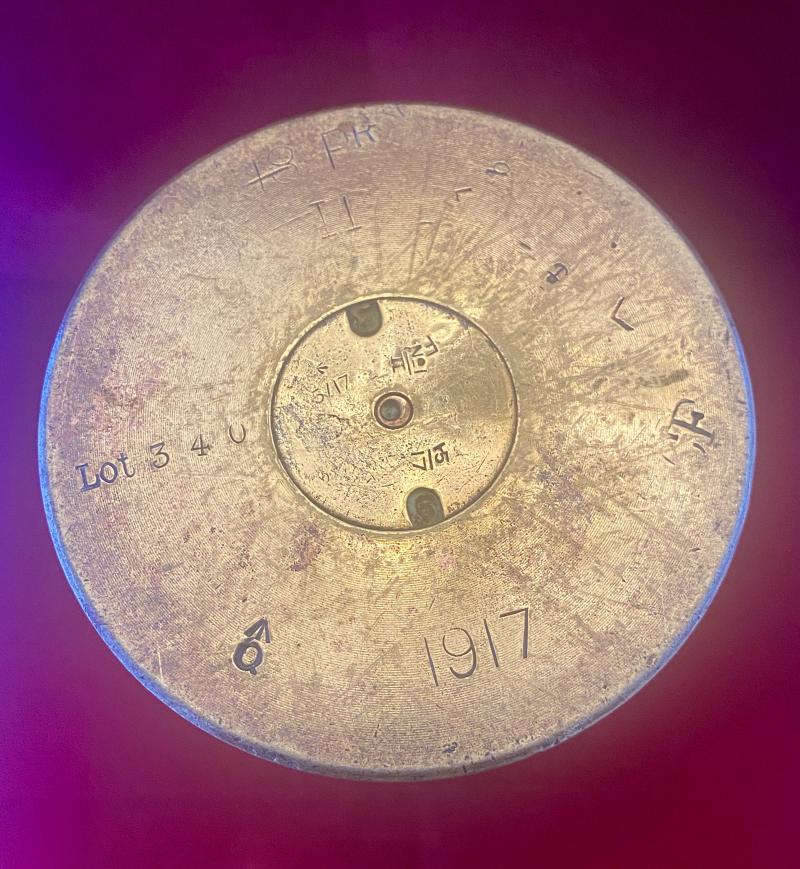
The base shows the stamped British ordinance marks for an 18 pounder, dated to 1917. Therefore this piece has clearly been made 3 years after the battle, as a commemorative piece and before Liège was repatriated at the end of 1918.
There were thousands of decorated WW1 artillery shell cases made during and after WW1, but occasionally you come across a piece that truly stands out and in my opinion this is such a piece. The quality of the embossing is exceptional, making it a true “work of art”.
The case measures 10” (25.4cm) tall by 4” (10.2cm) diameter at the base.
It weighs a heavy 1.35Kg.
Please see my pictures for the details of the condition, which complement this description.
Please see my TERMS OF BUSINESS regarding Deliver Charges and Insurance regarding additional insurance cover, should you require it, BEFORE the item is dispatched.
The responsibility lies with the customer to check with your Customs restrictions that this item can be imported into your country.
Code: 52184
75.00 GBP